
Moving beyond accidental management
Many professionals find themselves in management roles almost by accident. You might be excellent at your technical job, whether that is engineering, marketing, or accounting, and as a result, you get promoted. Suddenly, you are responsible for people, budgets, and strategic targets, often without any formal training on how to handle the complexities of human behaviour or organisational dynamics. This is where a professional qualification becomes more than just a certificate on the wall; it becomes a survival kit for the modern workplace.
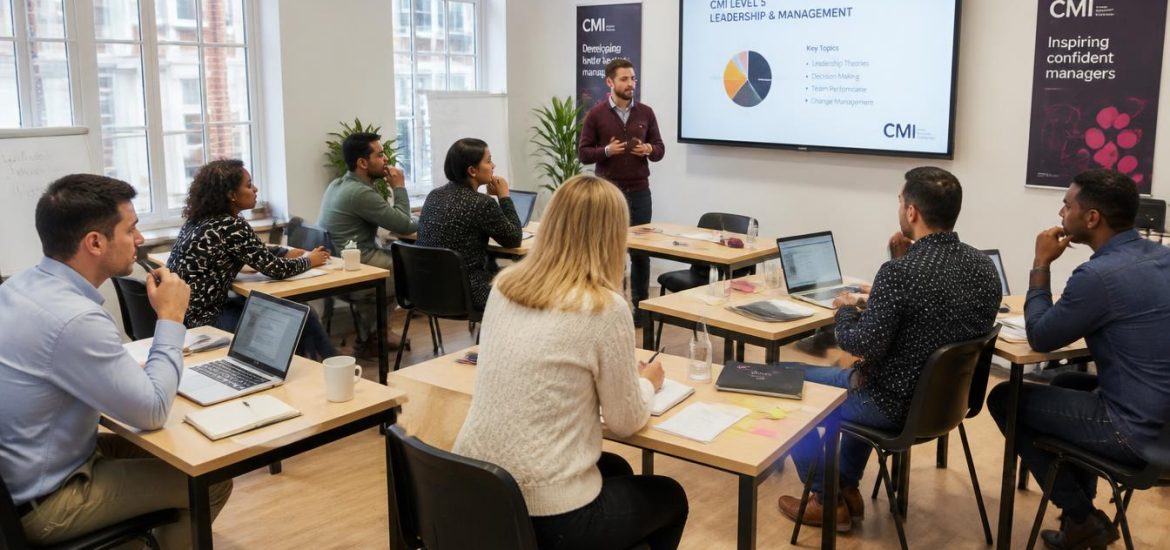
Choosing to enrol in a CMI Course is a common turning point for those who want to transition from being a subject matter expert to a truly effective leader. The Chartered Management Institute (CMI) is the only chartered professional body in the UK dedicated to management and leadership. Their programmes are designed to bridge the gap between having the technical ability to do a job and having the strategic insight to lead a department or an entire company.

Understanding the different levels of qualification
One of the first things people notice when looking into professional development is that these qualifications are tiered. This ensures that you aren’t stuck in a classroom learning basic delegation if you are already a director, and conversely, you aren’t thrown into high-level corporate strategy if you have just been put in charge of your first small team. The levels are generally broken down to match your current experience and your immediate career goals.
- Level 3: Designed for aspiring or first-line managers. This level focuses on the daily essentials, such as organising team schedules, monitoring performance, and learning how to communicate effectively with subordinates.
- Level 5: Aimed at middle managers who have more significant responsibilities. At this stage, the focus shifts towards project management, financial control, and leading across different departments.
- Level 7: Created for senior leaders and directors. This is where the conversation turns to strategic leadership, change management, and long-term organisational growth.
- Level 8: Reserved for those at the very top of the corporate ladder, focusing on the highest levels of strategic direction and macro-organisational impact.
- Award, Certificate, or Diploma: Within each level, you can choose the depth of your study. An Award is a short introduction, a Certificate covers a few core modules, and a Diploma provides a comprehensive deep dive into the subject matter.
The practical impact on your daily work
The beauty of a CMI Course is that it is fundamentally practical. Unlike some academic degrees that can feel detached from the reality of a Monday morning meeting, these qualifications are built around real-world application. You are encouraged to use your own workplace as a case study, applying the theories you learn to the actual challenges you face at your desk.
For instance, if you are struggling with a team member who is underperforming, the course material doesn’t just give you a vague theory on motivation. It provides frameworks for difficult conversations, legal considerations for performance management, and psychological insights into why people disengage. You can learn a technique on Tuesday and implement it in your office on Wednesday. This immediate return on investment is why so many UK employers are willing to fund these courses for their staff; the benefits to the business are visible almost instantly.
Why professional recognition still matters
In an era where everyone has “Manager” in their LinkedIn title, standing out requires more than just years of service. Having a nationally recognised qualification provides a stamp of approval that is understood across all industries. It tells recruiters and senior executives that you have been assessed against a rigorous set of standards and that you take your professional development seriously. It moves you from being someone who manages by intuition to someone who manages by informed, evidence-based practice.
Furthermore, completing these courses often provides a direct pathway to becoming a Chartered Manager (CMgr). This is the highest status that can be achieved in the management profession. Much like a Chartered Accountant or a Chartered Engineer, a Chartered Manager is recognised for their commitment to ethical practice, continuous learning, and proven impact on their organisation. For many, this status is the ultimate goal, providing a level of prestige that can significantly increase earning potential and job security.
Key benefits of pursuing a CMI qualification:
- Increased Confidence: Knowing the “why” behind management decisions allows you to lead with more authority and less second-guessing.
- Networking Opportunities: Enrolling in a course connects you with a community of like-minded professionals from diverse industries, allowing for a rich exchange of ideas.
- Career Progression: Statistics consistently show that CMI-qualified managers are more likely to be promoted and earn significantly more over their careers than their non-qualified peers.
- Access to Resources: Being part of the CMI ecosystem gives you access to a massive library of management resources, templates, and research that can help you solve daily problems.
- Global Recognition: While the CMI is a UK-based body, its qualifications are respected and recognised by international employers, making it a valuable asset if you plan to work abroad.
Adapting to the modern leadership landscape
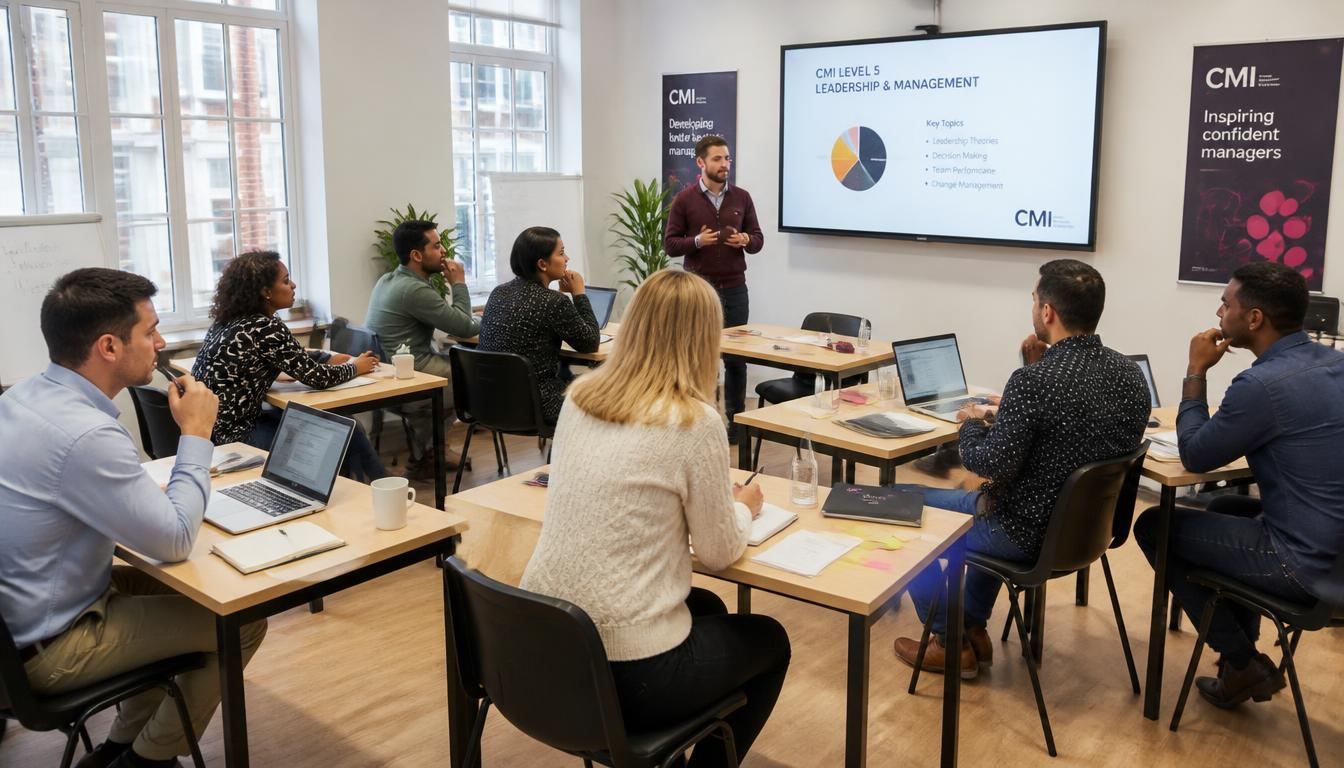
The world of work is changing faster than ever. The rise of remote and hybrid working, the integration of artificial intelligence, and a growing focus on mental health in the workplace mean that the management styles of twenty years ago are no longer sufficient. A modern management course addresses these contemporary issues head-on. You will explore how to manage virtual teams, how to foster an inclusive culture, and how to lead through periods of extreme uncertainty.
Leadership is no longer about giving orders and expecting them to be followed without question. It is about emotional intelligence, resilience, and the ability to inspire a diverse group of people toward a common goal. By studying a formal curriculum, you are forced to step outside your comfort zone and look at your own biases and habits. This self-reflection is often the most valuable part of the journey, helping you to identify areas where your leadership style might be hindering your team’s progress.
Flexibility for busy professionals
One of the biggest hurdles for anyone considering further education is time. Most people looking at these qualifications are already working full-time in demanding roles. Fortunately, the way these courses are delivered has evolved significantly. You no longer need to spend every Tuesday evening in a cold college classroom. Many providers offer blended learning, fully online modules, or intensive workshops that fit around a professional schedule.
This flexibility allows you to progress at your own pace. If you have a particularly busy month at work, you can scale back your study time, and then pick it back up when things settle down. The focus is on the quality of your output and your ability to demonstrate competence, rather than just clocking up hours in a lecture hall. This approach respects the professional status of the students and ensures that the learning process adds to your career rather than becoming an unbearable burden.
Investing in yourself is rarely a bad decision, especially in a competitive job market. Whether you are looking to secure your first management role or you are a seasoned executive looking to formalise years of experience, there is a clear logic in seeking professional accreditation. It provides the structure, the language, and the confidence needed to navigate the complexities of modern business leadership with ease.

Sophia is a personal finance writer who focuses on budgeting, investing, and wealth management. She helps readers make informed financial decisions with practical advice and expert analysis.